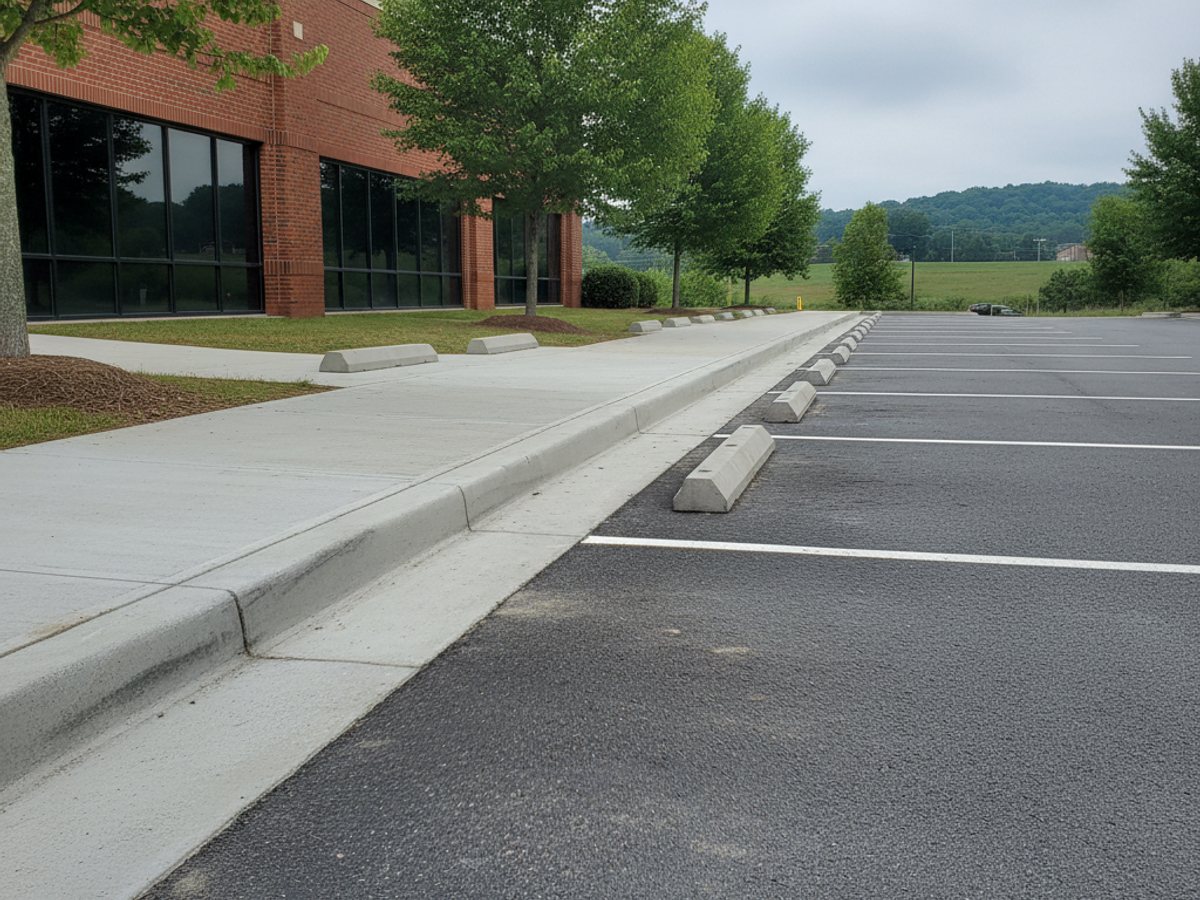
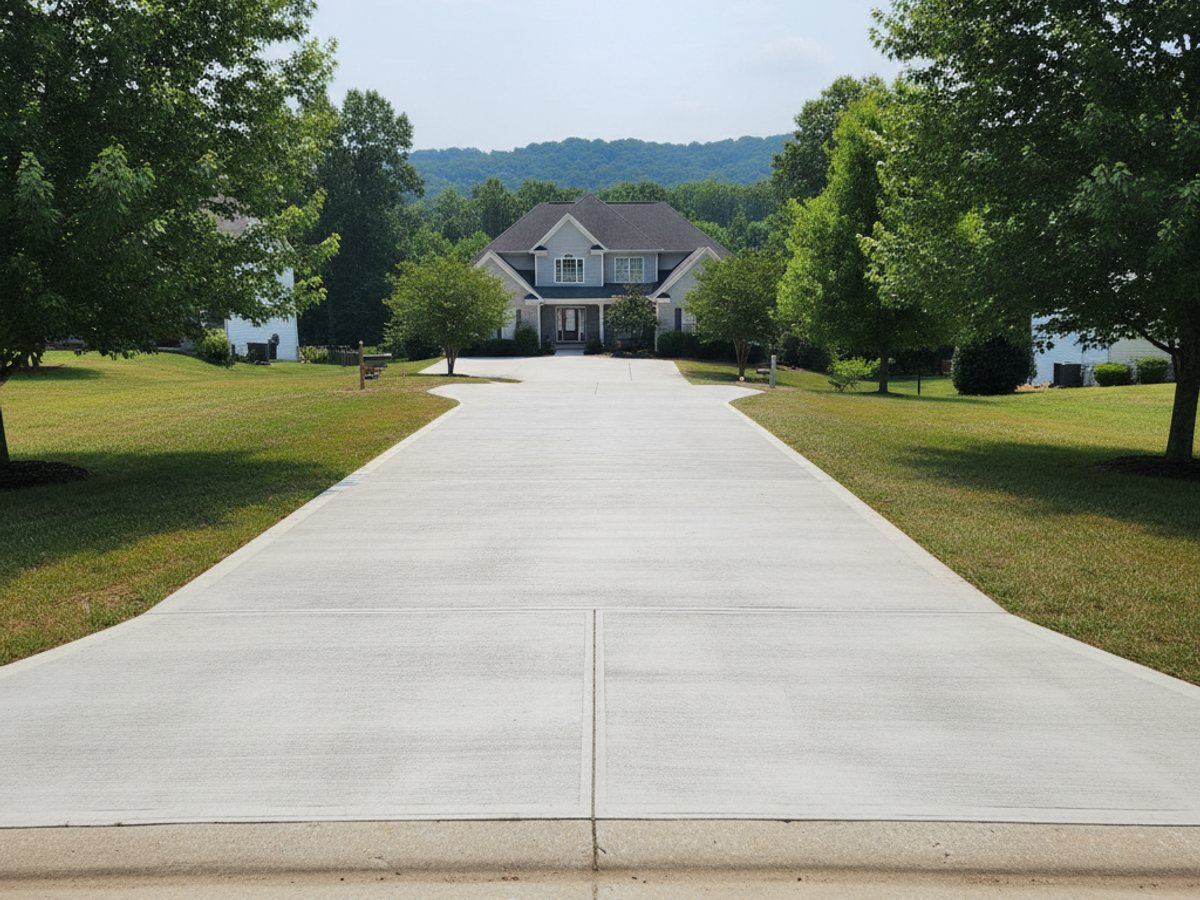
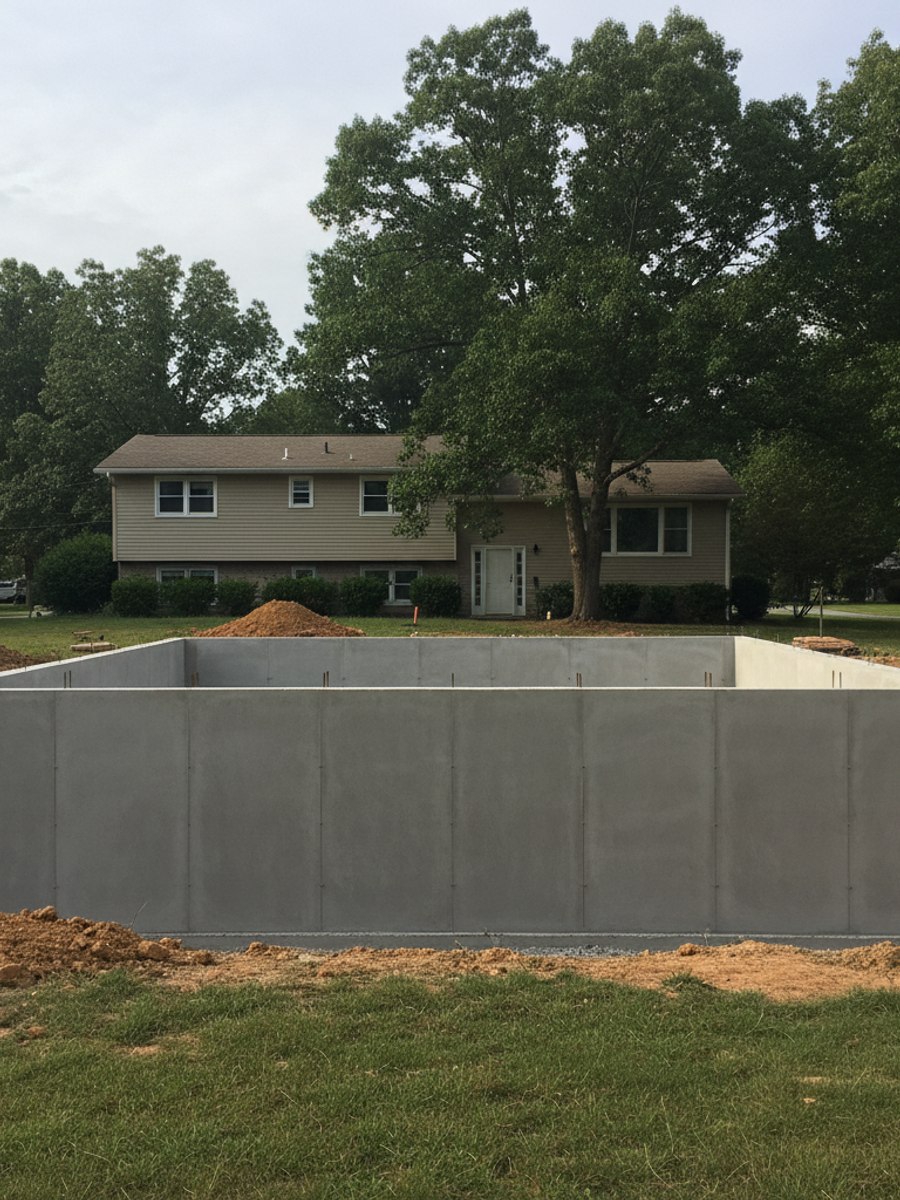
Every job below is one we do ourselves across Glade Hill.
We form and pour driveways thick enough to carry trucks and trailers, not just cars, with rebar reinforcement where the load calls for it. Before any concrete goes down we compact the gravel base, because a driveway is only as flat as what's underneath it. Expect to stay off it for about a week before parking a vehicle on it, even though it's walkable in a day or two.
Patio slabs get a broom finish, exposed aggregate, or a stamped pattern depending on what you want to look at from the back door. We slope every patio slightly away from the house so water doesn't pool against your foundation. Furniture and foot traffic are fine after a couple of days, grills and planters after a week.
Stamped concrete gets you the look of flagstone, slate, or brick without the joints that let weeds through. We run a color hardener into the surface before stamping so the color doesn't wear off like a coating would. It needs a sealer reapplied every couple of years to keep the color and texture from fading.
Walkways get control joints spaced tight, since a narrow slab cracks faster than a wide one if the joints are too far apart. We match the pitch to your existing grade so water runs off instead of standing on the walk in winter and turning to ice.
Garage floors, shed pads, and shop slabs need a vapor barrier under them if you're finishing the space above, otherwise moisture works its way up through the concrete for years. We pour to the thickness the use calls for, a shed pad and a slab meant to hold a lift aren't the same job.
Cracked, spalled, or sunken concrete usually points to a base problem, not a mix problem. Small cracks get routed and filled, but a slab that's sunk on one corner needs mudjacking or polyurethane foam injection to lift it back level instead of just patching the surface. We'll tell you straight if a slab is too far gone to repair and needs to come out.
Steps get built to a consistent rise and run, because uneven steps are a trip hazard and a code issue if you ever sell the house. We tie new steps into the existing porch or foundation with rebar dowels so they don't separate and pull away over time.
Retaining walls need drainage behind them as much as they need concrete in front of them, standing water is what pushes a wall over. We install drain tile and gravel backfill behind every wall we build, not just the block or poured face.
If a driveway or patio is structurally sound but the surface is pitted, scaled, or discolored, resurfacing with an overlay can save you the cost of tearing it out. It won't fix a slab that's cracked through or heaving, that's a repair or replacement job instead.
Exposed aggregate gives you a textured, slip-resistant surface by washing off the top layer of paste to reveal the stone underneath. It holds up well around pools and entryways where a smooth finish gets slick when wet.
Four steps, and no surprises in any of them.
You tell us what you want doing, we look at what is actually there, and we ask the awkward questions early.
In writing, itemised, free. If something might add cost later we flag it now rather than at the end.
Same crew throughout. We cover your floors, keep the dust down and tidy up before we leave each day.
You point out anything you are not happy with and we fix it before the invoice, not after.
These are the towns and communities the crew regularly drives to for concrete jobs.
Questions that come up once a concrete project is actually underway.
Describe the problem and we will tell you what it probably is. No obligation.